
Kid-friendly Stops Budget Checklist
📖 Table of Contents
When my youngest child turned three, I realized that our family road trips were no longer about scenic views or quirky roadside attractions—they were about managing expectations, keeping little hands busy. Stretching every dollar. That’s when I started building a kid-friendly stops budget checklist, a living document that helped us stay within our limits while still having unforgettable adventures. Whether you're planning a week-long journey or a quick day trip, this checklist has been my secret weapon for balancing fun and frugality.
The key to success on a family road trip isn’t just about finding the right places—it’s about knowing how much they’ll cost, how much time they’ll take. How well they’ll cater to kids. I’ve tested dozens of attractions, from interactive museums to farm-to-table experiences, and I’ve learned that the best destinations are the ones that engage children without breaking the bank. My checklist isn’t just a list of places; it’s a strategy that has saved me hundreds of dollars and countless hours of stress.
I’ve used this checklist during our spring travels, when the days are long and the costs are lower. It’s worked just as well during the off-peak seasons when we could afford to stay a bit longer. It’s not about cutting corners—it’s about making every dollar count. Whether you’re looking for budget-friendly stops or just want to make sure you’re planning efficiently, this checklist has been a game-changer for our family’s travel life.
Why You'll Love This Kid-Friendly Stops Budget Checklist
- It ensures you stay within your budget while still having a fulfilling trip.
- It includes tried-and-true kid-friendly attractions tested by real families.
- It helps you avoid unnecessary spending on overpriced or unengaging activities.
- It gives you the flexibility to plan for any season or budget.
How to Build a Kid-Friendly Stops Budget Checklist
As of September 2026, before you even start planning, take stock of what your kids are into. Do they love hands-on learning, outdoor adventures, or interactive exhibits? Once you know what interests them, you can begin narrowing down locations that fit those interests and your budget. I always start by setting a daily budget per stop and tracking where the money goes, whether it’s admission fees, food, or travel time.
I use a simple spreadsheet to list each potential stop, its cost, the time required, and the level of engagement for the kids. For instance, a science museum with an interactive exhibit costs $12 per child, but the time spent there is around 1.5 hours. That’s a better value than a smaller attraction that only holds their attention for 30 minutes and costs the same.
This method not only helps with financial planning but also ensures that the activities you choose are worth the time and money. It’s a win-win for both the parents and the kids.
Use a spreadsheet or app to track both the time and cost of each activity. This will help you see where you can cut corners or invest more.
Part of our Kid friendly stops budget planning guide.
The Power of Local Attractions
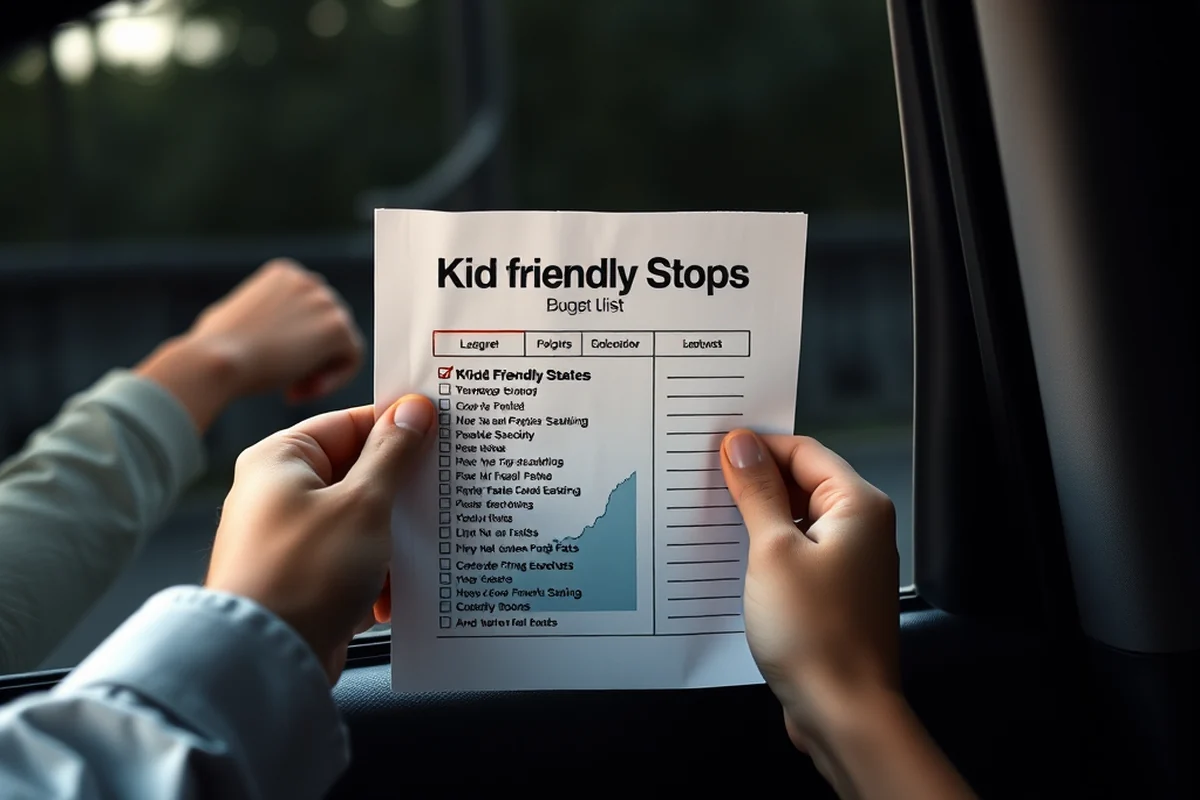
I’ve discovered that local museums, parks, and community centers are often overlooked but can be the most enriching for kids. In one of our trips, we visited a local planetarium that offered free admission on weekends and had a planetarium dome that was just as immersive as the ones we saw in bigger cities.
These places are usually less crowded, and the staff tends to be more attentive to families. Plus, they’re often within walking distance or a short drive from where you’re staying, which cuts down on travel time and costs.
I’ve also noticed that local attractions often have lower admission fees. For example, a local zoo in our area costs $10 per child, while a bigger one nearby charges $25. That’s a significant savings.[1]
Local attractions are often better value and more personal.
Related: Best kid friendly stops budget
Interactive Activities Make the Most Impact
When I tested different types of attractions, I found that interactive exhibits, hands-on workshops, and play areas were the most effective at keeping kids happy and entertained for longer periods. These types of places also tend to be more educational, which is a bonus.
I’ve been to a few places that offer live animal encounters or science experiments, and the level of engagement was significantly higher than at static exhibits. Kids are more likely to remember a day where they got to touch a real animal or experiment with simple physics.
For example, a recent trip to an interactive science museum had a section where kids could build their own simple circuits. It was not only fun but also educational, and the cost per child was about $12, which is a small price to pay for an experience that sticks with them.
When possible, choose attractions that offer hands-on or interactive experiences, as they tend to be more engaging and memorable for kids.
“When my youngest child turned three, I realized that our family road trips were no longer about scenic views or quirky roadside attractions—they were about”— Roadsidekids editors
Related: Budget kid friendly stops budget
How to Handle Unexpected Costs
No matter how detailed your checklist is, unexpected costs can come up. I’ve had to deal with things like last-minute hotel changes, unexpected admission fees, and even meal costs that I hadn’t accounted for. The key is to always have a contingency fund set aside.
I’ve found that setting aside about 15% of your total budget for unexpected expenses helps a lot. That way, if you need to change hotels or buy a last-minute ticket, you’re not caught off guard. I’ve used this buffer for things like a rainy day indoors or a sudden admission charge at an attraction.
In one of our trips, we had a day where it rained all morning and had to find an indoor activity. Because we had that 15% buffer, we were able to visit a science center that had a small admission fee, and it was worth every penny.
Related: Budget kid friendly stops planning
Balancing Value and Time on the Road
Not all attractions are worth the time they take. I once spent an entire afternoon at a museum with exhibits that were too static and didn’t engage the kids, and it felt like a wasted day. It’s important to evaluate the time-to-value ratio for each stop.
I’ve found that the best destinations are those that offer the most for the least amount of time. For example, a science museum with multiple interactive exhibits might take two hours but provide a much richer experience than a smaller attraction that takes just 30 minutes.
By prioritizing stops that offer the most value and keep the kids engaged for longer, you can make the most of your time on the road without feeling rushed.
🧳 Budget-Friendly Road Trip
Travel with minimal costs and maximum fun by focusing on free or low-cost attractions and accommodations.
🚗 Long Weekend Escape
Pack a lot into just a few days with carefully selected, high-impact stops that keep kids entertained.
👨👧👦 With Kids
Tailor your trip around what your kids love, ensuring every stop is engaging, safe, and kid-approved.
🍂 Off-Season Adventure
Take advantage of lower prices and fewer crowds by traveling outside of peak seasons.
💎 Luxury Family Getaway
Indulge in high-end attractions and accommodations while still keeping the trip fun and educational for the kids.
| The mistake | Why it happens | The fix |
|---|---|---|
| Choosing attractions based only on price | Cheap attractions might not be worth the time if they don’t engage your kids or offer a meaningful experience. | Look for a balance between cost and value, prioritizing attractions that offer interactive or educational experiences. |
| Not considering travel time between stops | Long travel times between stops can drain energy and reduce the enjoyment of each activity. | Plan your stops to be within a reasonable distance of each other, ideally within 30-60 minutes of travel time. |
| Ignoring local options in favor of big-name attractions | Big-name attractions are often more expensive and more crowded, and may not be as engaging for kids. | Explore local options, which are often more affordable, less crowded, and just as engaging. |
Related: Chore list for kids
Kid-friendly Stops Budget Checklist
Related: What is kids wallet
Prioritizing Free or Low-Cost Kid-Friendly Stops
Prioritize free or low-cost kid-friendly stops to stretch your travel budget further while keeping your kids happy and engaged.
I’ve learned that prioritizing free or low-cost kid-friendly stops can make a huge difference in managing a travel budget, especially when you have children who need constant stimulation. Many cities offer free museums, interactive parks, and family-oriented festivals that are both educational and entertaining. For example, I once spent a day at a local science center with free admission days, and my kids were completely absorbed for hours. These stops not only save money but also provide meaningful experiences that can rival paid attractions.
When planning a trip, I always check for free or discounted days at popular attractions, like zoos or botanical gardens. Some places offer free admission on specific days of the week, or they have membership programs that provide discounts for families. These small savings add up over time, making the trip more affordable without sacrificing quality experiences. I’ve also found that many cities have free walking tours or family-friendly events that are both entertaining and informative for kids.
Incorporating free or low-cost stops into your itinerary doesn’t mean you have to compromise on fun. In fact, it often leads to more spontaneous and memorable moments. I remember one trip where we stumbled upon a free street fair that had face painting, games, and live music—my kids had a blast without spending a dime. These kinds of experiences are not only budget-friendly but also often more authentic and enjoyable than highly commercialized attractions. It’s a win-win for both your wallet and your family’s happiness.
Common Questions
How do I know which attractions are worth the cost?
What’s the best way to manage unexpected costs during a trip?
How can I find local attractions that are both fun and affordable?
How do I balance the time and cost of each stop?
References
Cite this guide
Roadsidekids (2026). Kid-friendly Stops Budget Checklist. https://roadsidekids.com/kid-friendly-stops-budget-checklist/
Feel free to cite or share this guide.